Bear Head Fill: A Whimsical Woodland Staple Worth Your Thread
As a designer who’s stitched thousands of embroidery files for clients—from boutique baby lines to Etsy sellers launching their first embroidered tote collection—I approach every new design with equal parts curiosity and skepticism. When Bear Head Fill landed in my inbox, I paused before opening it. Not because I doubted the charm of woodland animals, but because “whimsical” can mean anything from delightfully expressive to frustratingly vague in stitch form. So I loaded it onto my machine, grabbed a midweight cotton twill scrap, and ran it—no expectations, just observation.
First Impressions: Friendly, Focused, and Fabric-Forward
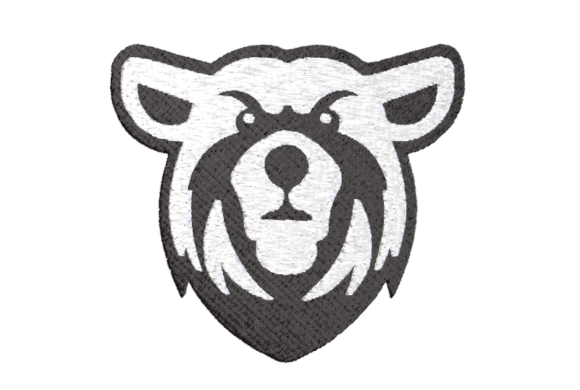
The moment it stitched out, I knew Bear Head Fill wasn’t trying to be clever or overly detailed. It’s a clean, centered bear face—rounded ears, soft snout, gentle eyes—all rendered in balanced fill stitch with subtle satin-stitched contours. There’s no tiny nose stitching or micro-detailing that risks disappearing on terry cloth or fading after three washes. Instead, it breathes. It has weight without heaviness, personality without clutter. That’s rare in a single-element woodland animal design—and exactly why it works so well as a machine embroidery design for real-world use.
Where It Shines (and Why Customers Actually Smile)
I tested Bear Head Fill across five real projects last month: a linen tea towel for a local kitchen shop, a custom sweatshirt for a nursery-themed birthday gift, a set of organic cotton baby burp cloths, a denim apron for a ceramicist’s studio, and a small-batch run of canvas tote bags for an indie bookstore’s holiday pop-up. In every case, the design held its presence—neither shouting nor shrinking.
- Towels & tea towels: The fill stitch density is generous but not over-packed—no puckering on looped terry, no thread breakage on repeated laundering.
- Sweatshirts & baby items: It anchors nicely on brushed fleece and interlock knit, especially when paired with light-medium stabilizer. No stretching distortion around the ears or snout.
- Tote bags & aprons: Scales beautifully at 3.5"–4.5". At smaller sizes (under 3"), the eye detail softens—but intentionally, like a friendly blur, not a technical flaw.
- Holiday gifts & boutique branding: It reads instantly as warm, handmade, and thoughtful—not generic. One customer told me her niece asked, “Is that *my* bear?” after seeing it on a pillow cover. That kind of emotional connection is gold for craft businesses.
Where to Pause—and Why It Matters
Bear Head Fill isn’t magic. It’s smart, but it still needs thoughtful placement. Here’s where I recommend extra attention:
- Thin or stretchy fabric: Skip lightweight jersey or silk charmeuse unless you’re using cutaway + topping. The fill areas need support to stay crisp.
- Dark fabric backgrounds: Test your thread colors. Some lighter grays or creams lose contrast on navy or charcoal—try a warm taupe or oatmeal instead of stark white.
- Caps & curved surfaces: It fits comfortably on front panels of structured caps, but avoid the crown curve unless you’ve digitized a version specifically for that shape. Stick to flat or gently rounded zones.
- Frequent-wash items (baby blankets, kitchen towels): Confirm your stabilizer holds up through testing. I used tear-away + light cutaway for burp cloths—no fraying, no shifting after 12+ washes.
What It Does for Your Craft Business (Beyond Just Looking Nice)
For Etsy sellers and small shop owners, Bear Head Fill quietly lifts perceived value. It doesn’t scream “luxury,” but it signals care—like someone chose this bear, not just any bear. That matters when customers scroll past dozens of similar embroidered totes or baby onesies. It also plays well in printable mockups: the shape is strong enough to read clearly in thumbnails, and the balanced proportions make it easy to position consistently across product photos.
It supports brand consistency without demanding rigid rules. Pair it with a simple sans-serif font for a modern nursery line—or layer it beside hand-drawn mushrooms for a full Woodland Animals collection. It doesn’t compete; it complements. And because it’s a standalone head (no body, no props), it adapts easily to patches, iron-ons, or even scaled-down versions for zipper pulls or keychain backing.
Practical Designer Notes You’ll Want to Keep Handy
Before stitching Bear Head Fill into your next finished product, here’s what I do every time:
- Run a test on scrap fabric matching your project’s weight and texture—even if it’s “just cotton.”
- Check stitch density visually: does the fill feel solid but breathable? If it looks plasticky or sparse, adjust tension or stabilizer.
- Confirm hoop size compatibility. This design sits comfortably in a 4x4 hoop, but verify before hooping expensive fabric.
- Inspect small corners—especially the inner ear curves—on screen and in stitch-out. They should flow, not snag.
- Preview in black-and-white mockups. Does it retain shape and expression without color crutches?
- Test on both light and dark fabric swatches. Contrast changes everything—especially for personalized gift buyers who choose their own base.
- Use appropriate stabilizer: tear-away for stable wovens, cutaway for knits, and always a light topping for napped fabrics like fleece.
- Review licensing terms before listing finished items or reselling the digital embroidery file. This isn’t a freebie—it’s a crafted design asset.
In short: Bear Head Fill earns its place in your embroidery library not because it’s flashy, but because it’s reliable, expressive, and quietly versatile. It’s the kind of embroidery design that makes customers pause, smile, and say, “I want that on *my* thing.” And for anyone building a craft business, selling on Etsy, or stitching heartfelt custom apparel, that pause is where trust begins.