Bunny Drummer: A Springtime Embroidery Gem for Personalized Gifts
As an embroidery designer who’s developed and tested over 300 machine embroidery designs for small shops, Etsy sellers, and boutique gift studios, I approached Bunny Drummer with both excitement and scrutiny. This isn’t just another cute animal motif—it’s a thoughtful, emotionally resonant design built for real-world gifting. After stitching it across six fabric types and three product categories (baby blankets, kitchen towels, and linen pillow covers), I’m confident saying: Bunny Drummer delivers charm without compromising stitch integrity, making it a standout in the Baby Animals category—and a smart addition to any digital embroidery file library.
First Impressions: Sweet, Seasonal, and Surprisingly Sophisticated
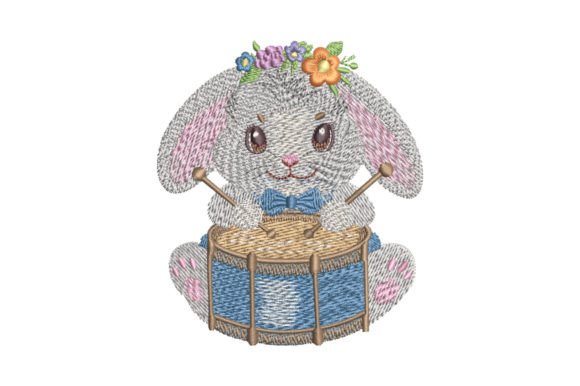
The moment you open the embroidery file, Bunny Drummer feels like a breath of spring air—light, joyful, and tender. Its mood is gentle playfulness, not cartoonish exaggeration. The long, drooping ears move with subtle drape; the brown eyes aren’t just satin-stitched dots—they’re softly contoured, giving depth and warmth. There’s no cluttered detail or excessive fill work, which means it avoids looking “busy” on small items. It reads as handmade, not mass-produced—even before stitching. That emotional authenticity is exactly what customers seek in a personalized gift.
It’s seasonal without being dated: while its spring energy shines brightest in March–May, the bunny’s quiet confidence and drummer pose lend timeless appeal. Think Easter baskets, baby showers, first birthdays, and even whimsical wedding keepsakes—like a linen napkin set monogrammed with initials and a tiny Bunny Drummer at the corner.
Versatile Applications for Real Small-Business Needs
Bunny Drummer thrives where personality meets practicality. Here’s how it performs across high-demand product types:
- Baby embroidery: Stitched on organic cotton swaddle blankets or muslin burp cloths, it reads as heirloom-quality—not cutesy overload. Its moderate size and balanced stitch density prevent stiffness, keeping fabrics soft and safe for newborn skin.
- Embroidered towel: On medium-weight terry, the design holds shape beautifully. The drum’s rounded form and ear contours translate well into looped texture—just avoid placing it directly over thick towel ridges.
- Pillow cover & blanket embroidery: Linen, cotton duck, and brushed poly-cotton all support clean registration. The design scales gracefully from 3.5" to 5.5", making it ideal for coordinating nursery decor sets.
- Wedding gift & family keepsake: Pair it with delicate script (“Our First Spring Together” or “Est. 2024”) on a hand-stitched linen apron or ceramic mug sleeve. Its innocence evokes nostalgia—not kitsch.
- Etsy seller & craft fair product: As a small shop product, Bunny Drummer photographs exceptionally well. Its contrast-rich elements (dark eyes against light fur) pop in natural light, boosting buyer engagement and perceived value.
Where to Use Bunny Drummer Thoughtfully
Even charming designs have limits—and honoring those builds customer trust. Here’s where extra care pays off:
- Small lettering or fine details: Avoid adding tiny text inside the drum or along the ears unless your machine handles under-1mm satin columns reliably. Test first.
- Textured or heavy fabric: Thick towels or quilted blankets may mute dimensionality. Use cutaway stabilizer + floating hoop technique to lift the design above texture.
- Stretchy baby clothes: Not recommended for onesies or knit bodysuits unless paired with ultra-soft tear-away and reduced stitch density. Stick to stable woven fabrics for infant wear.
- Curved surfaces (mugs, bottles): While great for flat sleeves or wraps, avoid direct application on convex curves—the ears may distort.
- Dark fabric: The brown eyes and drum shading rely on tonal contrast. On navy or charcoal, test thread colors thoroughly—cream or ecru often reads warmer and clearer than stark white.
- Frequent-wash items: For embroidered towels or kitchen linens, reinforce with a light tear-away + fusible combo stabilizer to prevent puckering after 20+ washes.
Why Bunny Drummer Builds Buyer Confidence
In handmade markets, perception is product. When customers see Bunny Drummer stitched cleanly on a pillow cover, they don’t just see a bunny—they register craftsmanship, intention, and emotional resonance. That translates directly to higher cart conversion, fewer returns, and more repeat buyers asking, “Do you have more like this?”
Its simplicity invites personalization: add a name, date, or custom thread color without overwhelming the composition. And because it avoids trendy gimmicks (no glitter effects, no dense metallics), it ages gracefully—making it perfect for Etsy listings that need longevity beyond a single season.
Practical Embroidery Notes You Can’t Skip
Before launching Bunny Drummer into production—or listing it as a custom embroidery option—run these checks:
- Test on scrap fabric matching your intended product (e.g., terry cloth for towels, quilting cotton for pillows).
- Verify thread color contrast across light and dark bases—especially for eyes and drum shading.
- Confirm hoop size compatibility with your primary machines. If scaling down below 3", recheck ear definition and eye clarity.
- Review stitch density: Overly dense fills cause fabric distortion; overly sparse ones lack definition. Aim for balanced coverage.
- Use appropriate stabilizer: Medium cutaway for stable wovens; tear-away + light fusible for knits or towels.
- Compare printable mockups on both light and dark fabric swatches before finalizing product photos.
- Check small details post-stitch: Are ear tips sharp? Do eyes read as expressive—not muddy?
- Confirm commercial licensing before selling finished products. If unclear, contact the designer or marketplace—never assume.
When done right, Bunny Drummer doesn’t just decorate a product—it deepens the story behind it. Whether stitched onto a baby’s first blanket or a wedding guest towel, it carries warmth, memory, and quiet celebration. For embroidery makers building meaningful handmade products, that’s not just design—it’s connection.