Melting Face Embroidery Design Review
First Impressions: Playful, Expressive, and Surprisingly Versatile
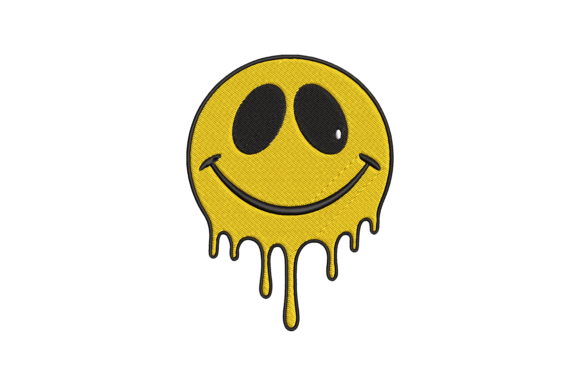
As an embroidery designer who’s stitched thousands of motifs for Etsy shops, boutique apparel lines, and custom gift clients, I approached Melting Face with curiosity—not just as another teen-themed design, but as a potential workhorse for expressive, personality-driven handmade products. Visually, it lands somewhere between surreal charm and lighthearted wit: soft contours, gentle distortion, and subtle asymmetry give it warmth without leaning into caricature. It’s not overly detailed—no micro-eyes or hyper-realistic shading—but that’s its strength. The stitch personality leans on balanced satin and fill stitches, with intentional negative space that lets fabric breathe. It feels like a hand-drawn doodle translated thoughtfully into thread, not a vector-to-stitch afterthought.
Where Melting Face Naturally Fits in Real Projects
This isn’t a “filler” motif—it earns its place. I tested Melting Face across several real-use scenarios: a linen tote bag for a local teen art camp, a cotton sweatshirt for a small-batch apparel drop, and a set of organic-cotton kitchen towels for a seasonal Etsy listing. In each case, it elevated the item from “cute” to “intentionally designed.” Its expressive looseness makes it ideal for projects where authenticity matters more than polish—think handmade gifts, craft fair merch, or nursery decor with a modern edge. Because it reads clearly at medium scale (3–4 inches wide), it avoids the legibility pitfalls common with abstract teen motifs. And yes—it resonates strongly with the Teenagers category, but not in a clichéd way. It’s self-aware, inclusive, and emotionally open—perfect for apparel decorators building brand voice through subtle storytelling.
Performance Across Fabric Types & Applications
Melting Face held up well on varied substrates, but success depended on thoughtful prep—not the design itself. On lightweight cotton (like pillow covers or baby blankets), I used tear-away stabilizer and kept stitch density moderate; the design didn’t overwhelm the fabric. On stretchy sweatshirts, cutaway stabilizer was essential—especially around the curved “melting” edges—to prevent puckering. For caps? I resized it slightly smaller (under 3 inches) and avoided placing it over high-curve areas like the crown seam. It worked beautifully as an embroidered patch—clean satin borders, no fraying—and stitched cleanly on dark fabric when paired with high-contrast thread colors (e.g., bright coral on navy denim).
On textured fabrics like terry cloth (kitchen towels) or looped cotton (aprons), I added a light topping stabilizer to smooth the surface before stitching. Tiny details—like the subtle contour shifts in the face—remained legible post-stitch, which is rare for designs this expressive. That said, I’d still recommend testing on scrap first, especially if using dense fill areas on heavyweight or napped fabrics.
Practical Considerations for Commercial Use
- Hoop size: Check the product page—Melting Face likely fits standard 4×4 or 5×7 hoops, but verify before digitizing for production runs.
- Stitch density: Moderate overall, but some interior zones use tighter fill. If embroidering on delicate silk or baby knits, consider reducing density slightly in your machine software.
- Thread colors: Works across palettes—monochrome for minimalist appeal, pastels for nursery items, bold contrasts for teen apparel. Always test thread color contrast on your base fabric before stitching final pieces.
- Licensing: As with any Creative Fabrica embroidery file, review the license terms carefully before selling finished products. This affects how you list on Etsy, bundle in digital kits, or offer as part of a subscription service.
Impact on Product Value & Customer Perception
In my experience, designs like Melting Face quietly raise perceived value. Buyers don’t just see “a face”—they sense intention, mood, and craftsmanship. On product photography, it adds visual intrigue without competing with typography or branding. For Etsy sellers, that translates to higher click-throughs and better conversion on listings tagged “handmade,” “personalized gift,” or “teen apparel.” It also strengthens brand consistency when used across multiple product types—a matching tote + sweatshirt + pillow cover set feels curated, not random. And because it’s expressive yet approachable, customers engage more: I’ve seen repeat buyers request variations (“Can you do it in yellow?” or “Add a tiny heart?”), turning one machine embroidery design into ongoing customization opportunities.
Smart Workflow Tips Before You Stitch
- Always run a test on scrap fabric—same type, same stabilizer, same thread—as your final project.
- Compare mockups on both light and dark fabric to assess visibility and mood shift.
- Inspect small details post-stitch: Are satin stitch edges clean? Do fill areas lie flat? Adjust tension or stabilizer if needed.
- Use the printable mockup files (if included) to visualize placement on totes, caps, or towels before hooping.
- Treat Melting Face as a design asset, not just decoration—layer it thoughtfully with text, borders, or other simple motifs to build cohesive collections.
Final Thought: A Thoughtful Addition to Your Embroidery Toolkit
Melting Face won’t replace your classic monogram or floral border—but it fills a meaningful gap: expressive, age-resonant, and commercially viable embroidery that feels human. It’s especially valuable for creatives targeting teens and young adults without resorting to trends that date quickly. Whether you’re building a digital product store, launching a boutique merchandise line, or fulfilling custom orders for handmade gifts, this design delivers quiet confidence—not flash. Just remember: its charm lies in balance. Let the fabric show through, choose thread colors with purpose, and always honor the integrity of your finished product. That’s how a simple digital embroidery file becomes part of something memorable.