Quilting Swirls: A Designer’s Real-World Review
First Impressions: Whimsy with Purpose
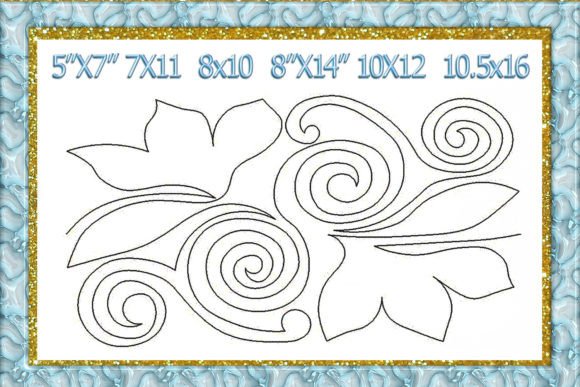
When I opened Quilting Swirls for the first time, I didn’t just see a background embroidery design—I saw movement. It’s fluid, looping, and quietly confident—not fussy, not stiff, but full of gentle rhythm. The swirls interlace without overcrowding, leaving breathing room between elements. That spacing matters. As someone who’s stitched hundreds of custom tote bags and nursery pillows, I know that a background design like this lives or dies by how well it supports, not overwhelms, the main motif—or stands alone with quiet charm.
A Real Project Test: Embroidering a Linen Tea Towel
Last week, I used Quilting Swirls as a subtle border on a set of linen tea towels for a local boutique. No monogram, no center motif—just the swirls stitched along the lower third in soft ecru thread. The result? Instant warmth. Customers commented on how “handmade” and “thoughtful” they felt—not because the design screamed attention, but because it whispered texture and care. That’s the sweet spot for Quilting Swirls: it elevates a simple handmade product without demanding spotlight. It works especially well when you want to signal craftsmanship, not clutter.
Where It Shines (and Where It Needs Caution)
Quilting Swirls performs beautifully on stable, medium-weight fabrics: cotton tea towels, canvas tote bags, twill pillow covers, and brushed cotton baby blankets. On these surfaces, the satin stitch curves hold their shape, and the fill stitch density feels balanced—not so light it fades, not so dense it puckers.
- Custom apparel: Works well on sweatshirt cuffs or back yokes, but avoid tight curves like cap brims unless you test stabilizer layers first.
- Baby embroidery: Ideal for crib bumper corners or onesie hems—soft enough for delicate skin, distinctive enough to feel special.
- Holiday & wedding gifts: Stitched in ivory on oatmeal linen napkins or cream muslin pouches, it reads as heirloom-quality, not seasonal.
- Etsy listings & craft fair products: Pair it with minimalist mockups—it photographs cleanly and scales well across digital previews and printed tags.
But here’s where judgment matters: Quilting Swirls isn’t built for ultra-fine detail work. Don’t push it onto 3-inch hoops for tiny patches or try to shrink it below 3.5" wide without checking stitch integrity. On thin knits or stretchy fabric, the loops can distort unless you use cutaway + tear-away stabilizer combo. And on dark fabric? Test contrast early—some thread colors vanish into charcoal or navy unless you choose matte, high-contrast tones.
What It Does for Your Brand—and Your Buyers
As a designer who also sells digital embroidery files, I pay close attention to how a background design affects perceived value. Quilting Swirls subtly raises the bar. When stitched on a plain apron or kitchen towel, it signals intention—not “I added something,” but “I curated something.” That builds customer trust. Buyers notice the difference between filler and finesse, especially in personalized gifts or boutique merchandise.
For Etsy sellers and small shop owners, this matters: a well-placed Quilting Swirls element makes a $28 pillow cover feel like a $42 one—not through flash, but through cohesion. It supports brand consistency when used across product lines (e.g., same swirl layout on matching towel + apron + oven mitt sets). And because it’s inherently non-literal—no florals, no animals, no dates—it stays relevant across seasons and audiences.
Practical Designer Notes You’ll Actually Use
Before stitching Quilting Swirls into your next finished product, do these five things:
- Test on scrap fabric first—especially if using textured weaves or blends. Linen, terry cloth, and quilting cotton all behave differently under needle tension.
- Check thread color contrast in natural light and on-camera. A pale gold may look warm in daylight but wash out in product photos.
- Review stitch density visually in your embroidery software. If fill areas look overly solid or sparse at actual size, adjust density slightly before hooping.
- Confirm hoop size compatibility. Since the description mentions “comes with mu…” (likely “multiple formats”), verify which file versions match your machine—and whether any require resizing for your standard hoops.
- Use proper stabilizer—lightweight cutaway for stable wovens, medium-weight for knits, and always test wash one sample if the finished product will be laundered regularly.
Commercial Use & Licensing Reality Check
If you’re an embroidery business owner, Etsy seller, or digital product creator, remember: Quilting Swirls is a machine embroidery design meant for real-world application—but licensing terms govern how you use it. Always confirm whether your purchase permits commercial embroidery (e.g., stitching on client totes), resale of physical finished products (like embroidered pillow covers), or redistribution of the digital embroidery file itself. When in doubt, contact the seller directly. A clear license protects your craft business and keeps your creative entrepreneurship sustainable.
Final Thought: Backgrounds That Earn Their Space
Not all background embroidery designs earn their place on a finished product. Some distract. Some fade. Some just feel like afterthoughts. Quilting Swirls isn’t one of those. It’s got presence without pressure—graceful motion that serves the object it’s stitched on, not the other way around. Whether you’re designing for a holiday gift line, building a cohesive small shop collection, or choosing embroidery file assets for client work, Quilting Swirls delivers quiet confidence. And in handmade product design, that’s often the most valuable stitch of all.