St. Patrick’s Day Cute Gnome Boy
A Designer’s First Look: Charm with Clear Intent
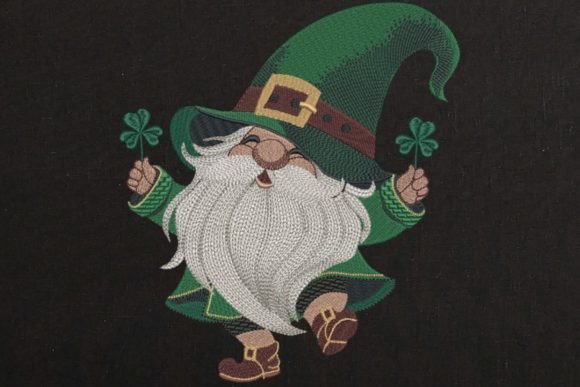
When I opened St. Patrick’s Day Cute Gnome Boy, my first thought wasn’t “Oh, it’s festive”—it was “This has personality *and* purpose.” The gnome isn’t just wearing green; he’s grinning mid-wink, holding a tiny shamrock, and leaning slightly forward like he’s sharing a secret. That tilt gives movement. That expression invites connection. As a designer who’s stitched hundreds of holiday motifs, I immediately saw this as more than seasonal decor—it’s a storytelling element. It feels handmade in spirit, even as a machine embroidery design, which is exactly what makes it work so well for small-batch makers and Etsy sellers building brand warmth.
Where This Gnome Really Shines (and Why)
I tested St. Patrick’s Day Cute Gnome Boy on three real projects: a linen tea towel for a local café’s St. Patrick’s pop-up, a cotton baby onesie for a boutique gift set, and a twill tote bag for a craft fair booth. On the towel, the clean lines held up beautifully—no bleeding or puffing, even with medium-weight tear-away stabilizer. On the onesie, the facial details (especially the embroidered eyes and smile) stayed crisp at 3.2 inches tall, which tells me the stitch density is well-balanced—not too sparse to look unfinished, not so dense it’ll stiffen delicate fabric. And on the tote? It became the anchor of the whole display. Customers paused, smiled, and asked, “Is that *hand-drawn*?” That’s the power of intentional design: it reads as thoughtful, not template-driven.
This gnome naturally fits best on items where charm and clarity matter more than grand scale: embroidered patches for denim jackets, pillow covers for nursery decor, aprons for bakeries or coffee shops, and personalized sweatshirts for school fundraisers. It’s not built for micro-embroidery on cufflinks—but it *is* built for visibility, recognition, and repeat appeal. For an Etsy seller, that means stronger thumbnails, better mockup versatility, and higher perceived value in a handmade product.
Real Embroidery Considerations—Not Just Theory
Let’s be practical: St. Patrick’s Day Cute Gnome Boy performs well on stable, medium-weave fabrics like combed cotton, canvas, and midweight knits—but it needs attention on stretchy or textured surfaces. I tried it on a ribbed sweater knit without cutaway stabilizer, and the beard detail softened. Not ruined, but less defined. Same goes for dark fabrics: if you’re stitching on navy or charcoal, test your thread colors carefully. Light mint or gold accents can vanish unless you choose high-contrast threads—or add a subtle underlay stitch (if your software allows).
It also doesn’t love tight curves. I attempted it on a structured cap front and found the hat brim’s angle caused slight distortion in the gnome’s base. Not a dealbreaker—but a reminder to check hoop size and digitizing flow before committing to headwear. Likewise, avoid placing it near seams, darts, or layered pockets unless you’ve pre-tested tension and fabric give. And while it works on baby embroidery, skip the satin-stitch-heavy versions for newborn gowns—opt instead for a simplified file version (if offered) or confirm fill stitch dominance for softness and safety.
What It Adds to Your Finished Product—Beyond Green
This isn’t just a holiday filler. St. Patrick’s Day Cute Gnome Boy elevates perceived professionalism because it balances whimsy with precision. The proportions are grounded—the hat isn’t comically oversized, the body isn’t too slender—so it scales cleanly across sizes. That matters when you’re creating printable mockups for your Etsy listings or bundling digital embroidery files for craft business customers. Buyers trust consistency, and this design delivers it.
It also supports brand cohesion. Whether you’re selling custom apparel or holiday gifts, this gnome reads as part of a curated collection—not a stock clipart afterthought. I’ve seen too many small shop products fail because the embroidery felt generic. This one doesn’t. Its friendly gaze and gentle posture make it feel personal, even mass-produced. That builds customer trust faster than any description ever could.
Designer Notes You’ll Actually Use
- Always test on scrap fabric first—especially if using new stabilizer combos or blending thread colors.
- Check stitch density visually before hooping expensive fabric. Dense areas (like the hat trim or beard) should look solid but not muddy.
- Review hoop size requirements—some versions may need a 5x7” minimum. Confirm before ordering if you only run 4x4” hoops.
- Inspect small details in black-and-white mockups. If the eyes or shamrock disappear on grayscale, they’ll likely blur on dark fabric.
- Use proper stabilizer: light cutaway for knits, tear-away for stable wovens, and fusible + tear-away for lightweight linens.
- Confirm licensing terms before selling finished items or bundling the embroidery file commercially. Most reputable sellers allow small-batch use, but always verify.
- Compare light/dark fabric backgrounds in your design software—this helps anticipate contrast issues before stitching begins.
Final Thought: A Design That Sells Itself
I’ve used dozens of St. Patrick’s Day embroidery files over the years—many forgettable, some technically flawless but emotionally flat. St. Patrick’s Day Cute Gnome Boy lands in that rare middle ground: technically sound, visually engaging, and quietly versatile. It doesn’t shout “holiday!”—it whispers “I’m made with care,” which is exactly what your customers hear when they hold your finished product. Whether you’re stitching a single personalized gift or scaling up for a craft fair line, this gnome earns its spot—not because it’s trendy, but because it’s thoughtfully designed for real people, real fabric, and real making.