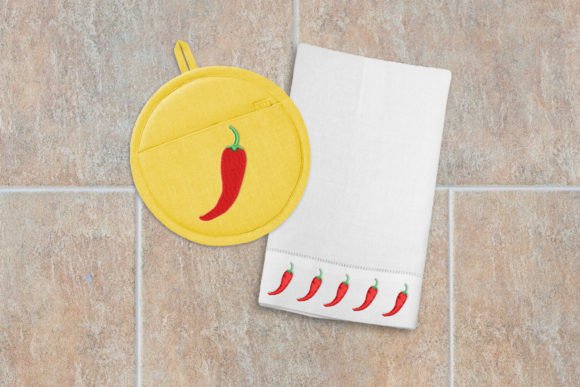
Chili Pepper Mini
A Tiny Flame That Packs Real Design Weight
As someone who’s stitched hundreds of food-themed embroidery files—from oversized donuts to delicate herb sprigs—I opened Chili Pepper Mini expecting charm, not complexity. What I found was a quietly confident little design: compact, expressive, and unmistakably spicy without shouting. Its silhouette is tight and friendly—a rounded, slightly curved pepper with a gentle taper at the stem end—not cartoonish, not botanical, but *human*. It feels like something you’d sketch on a napkin before turning it into a finished product. That’s rare in mini designs, where cuteness often sacrifices clarity.
Where It Lives Best (and Why)
I tested Chili Pepper Mini across three real projects: a linen tea towel for a local café’s Cinco de Mayo pop-up, a set of organic cotton baby onesies for an Etsy shop, and a trio of embroidered patches sewn onto denim aprons for a spice-blend small business. In each case, the design held its own—not as a centerpiece, but as a thoughtful accent that elevated the whole piece.
- Tote bags & aprons: Perfect scale for corner accents or row repeats. Stitched three times in a staggered line along the hem? Instant personality—no extra branding needed.
- Baby embroidery: Soft curves and no fine interior details mean it reads clearly even at 1.2" tall. Parents appreciate that “spicy” doesn’t read as aggressive on infant wear.
- Holiday embroidery & personalized gifts: Paired with simple script (“¡Sí!” or “Spice Up Your Life”) on a kitchen towel or ceramic mug sleeve, it adds warmth and wit—not kitsch.
Fabric & Function: Where It Shines—and Where to Pause
Chili Pepper Mini thrives on stable, medium-weight fabrics: linen, quilting cotton, midweight twill, and brushed poly-cotton blends. On a sweatshirt? Yes—but only with tear-away + cutaway stabilizer combo underneath. The fill stitch area around the pepper body is dense enough to hold shape, but not so heavy it buckles knit fabric.
Proceed with care on:
- Thin or sheer fabrics (like voile or lightweight rayon): The satin-stitched outline may show through or snag. Add a light iron-on backing.
- Curved surfaces (caps, curved pillow seams): Its compact shape helps, but always test hoop placement—centering matters more than usual here.
- Dark fabric + light thread: The design relies on clean contrast. A pale yellow or coral thread pops beautifully against navy or charcoal—but avoid near-white thread on black unless you’re using high-sheen polyester for brightness.
What It Does for Your Handmade Product—Beyond the Stitch
This isn’t just a machine embroidery design—it’s a quiet trust-builder. When a customer sees Chili Pepper Mini cleanly stitched on a handmade apron, they register craftsmanship: intentional scale, balanced density, and visual rhythm. That translates directly to perceived value. Etsy buyers scroll fast—but a well-executed chili pepper on a tea towel stops them. It signals “this seller understands detail,” which builds confidence in their entire shop.
For craft fairs or boutique branding, it works double duty: festive without being seasonal-only (spice lovers buy year-round), and versatile enough to pair with other food-themed embroidery files—think avocado, lime wedge, or molcajete motifs—to build cohesive design assets.
Designer Notes You’ll Actually Use
Before stitching your first Chili Pepper Mini for sale or gifting, do these five things:
- Test on scrap fabric—not just the same fiber, but the same weight and finish as your final project. Linen behaves differently than cotton duck, even if both are “medium weight.”
- Check thread color contrast in natural light *and* under store lighting. What looks vibrant on screen can mute on fabric.
- Review stitch density visually—zoom in on your embroidery software. Look for tight corners where fill and satin stitches meet; those areas should flow, not pile up.
- Confirm hoop size compatibility with your machine and intended garment. If you’re stitching it on a child’s cap, make sure it fits comfortably inside your smallest hoop without re-hooping.
- Verify licensing before listing finished items or digital embroidery files for resale. This is especially critical for Etsy sellers and craft businesses scaling beyond personal use.
Final Thought: Small Design, Big Intention
Chili Pepper Mini doesn’t try to be everything. It’s not a statement piece—it’s a punctuation mark. A wink in thread. That’s its strength. In a world of overscaled, over-digitized food embroidery, this design respects the hand behind the machine and the eye behind the purchase. It works for Cinco de Mayo, yes—but also for a chef’s birthday gift, a taco truck’s merch line, or a handmade kitchen kit sold at a farmers’ market. It’s the kind of embroidery file that disappears into the product while making it feel unmistakably *yours*.
If you’re curating embroidery project ideas for your craft business—or choosing a digital embroidery file that balances charm, clarity, and commercial sense—Chili Pepper Mini earns its spot. Not because it’s flashy, but because it’s faithful: to the craft, to the customer, and to the quiet heat of something genuinely well-made.