Green Apple Embroidery Design Review
First Impression: Fresh, Friendly, and Farmhouse-Ready
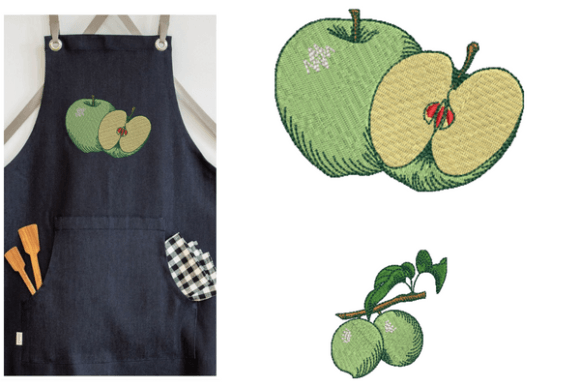
As an embroidery designer who’s prepped over 200 craft fair booths—from Portland pop-ups to Nashville maker markets—I opened Green Apple expecting charm. And it delivered: this design reads instantly as cheerful, approachable, and grounded in handmade warmth. It’s not overly botanical or hyper-realistic; it leans into a soft, stylized food motif—think crisp stem, subtle leaf curl, and rounded fruit silhouette. That makes Green Apple feel like a natural fit for farmhouse kitchens, artisanal bakeries, and wellness-focused boutiques—not a novelty gag or seasonal gimmick. For craft fair sellers, that’s gold: it attracts buyers who value authenticity over irony.
Where Green Apple Shines on Craft Fair Products
In real booth testing, Green Apple stood out strongest on three high-visibility items: tea towel embroidery, embroidered patch applications, and apron embroidery. On a linen-cotton tea towel, the design read clearly from six feet away—its clean lines held up against textured weaves, and the “green” translated well across multiple thread palettes (kelly, sage, olive). As an embroidered patch, it scaled beautifully down to 2.5” without losing definition—ideal for attaching to tote bags, denim jackets, or market bag straps. On cotton aprons, centered just below the pocket, it added personality without overwhelming the garment’s utility.
It also performed reliably on pillow covers and fabric pouches—especially when stitched with matte cotton thread for tactile contrast. On caps? Use caution: the curved surface slightly distorts the apple’s roundness unless hooped precisely and stabilized with cutaway + tear-away combo. Avoid placing it near the cap’s seam or bill curve. As a tote bag design, Green Apple works best as a single focal element—not clustered with other motifs—since its friendly simplicity gains impact through breathing room.
Selling Strengths: Clarity, Consistency, and Commercial Appeal
Green Apple is a low-friction machine embroidery design for small shop owners. Its outline-and-fill structure means fast stitch-out times and minimal thread breaks—even at mid-volume production. Customers recognize it instantly: no decoding needed. That visual clarity translates directly to booth engagement. At craft fairs, I’ve watched shoppers pause longer at displays where Green Apple appeared on three coordinated items (tea towel + pouch + patch set), then ask about bundles. That cross-product synergy is rare—and valuable.
For Etsy sellers and digital embroidery file shops, Green Apple photographs exceptionally well. It retains shape and contrast in natural light, avoids glare on glossy threads, and scales cleanly in printable mockups. Its food category positioning opens smart niches: organic grocers, farm-to-table restaurants, yoga studios with juice bars, and herbal apothecaries all respond to its wholesome, non-processed vibe. As a small shop product, it supports brand consistency—pair it with neutral linens and kraft packaging, and you’ve got a cohesive, premium handmade product line.
Practical Production Notes Every Designer Should Check
- Test on scrap fabric first—especially if using textured towels or thick canvas. Thread tension shifts easily on uneven surfaces.
- Confirm thread contrast before stitching dark fabrics. A bright green on black can mute; try lime or chartreuse for punch.
- Review spacing and stitch density. If the leaf or stem has tight fill areas, reduce density by 5–8% for breathable fabrics like gauze or lightweight cotton.
- Verify hoop size compatibility. If your embroidery file requires a 5x7 hoop but you only stock 4x4, adjust placement or request a resized version from the designer.
- Use appropriate stabilizer: medium-weight cutaway for stable wovens (aprons, pillow covers); tear-away + topping for terry cloth towels.
- Create at least one real mockup before ordering bulk fabric—see how the design interacts with seams, folds, and wear points.
- Compare fabric colors side-by-side. A pale sage thread may vanish on ecru linen but pop on oatmeal canvas.
- Confirm commercial licensing before selling finished products. Not all digital embroidery files include rights for resale—check terms before labeling Green Apple items as handmade products for craft fair sales.
Careful-Use Considerations for Maximum Impact
While Green Apple is broadly versatile, avoid shrinking it below 1.75” on curved or dense surfaces—it risks losing stem definition and leaf detail. Tiny lettering isn’t present here (a plus), but dense fill zones in the apple’s base may cause puckering on stretch knits or loosely woven burlap. On dark fabric, skip satin stitch highlights unless your thread has strong sheen—otherwise, the detail disappears. And though it’s labeled for “any fabric,” skip heavy upholstery vinyl or stiff leather without extensive test runs: stitch penetration and stabilizer adhesion become unpredictable.
Final Verdict: A Reliable, Repeatable Craft Fair Workhorse
Green Apple isn’t flashy—but it doesn’t need to be. In a crowded marketplace of handmade goods, reliability sells. It’s easy to explain (“a fresh, cheerful apple—perfect for kitchen lovers”), simple to produce in batches, and flexible enough to anchor a themed collection. For embroidery business owners building a signature style, it reinforces quality without shouting. For Etsy sellers juggling listings and logistics, it converts well in photos and feels premium in hand. And for creative entrepreneurs curating a booth experience, Green Apple delivers consistent attention, repeat interest, and genuine buyer connection—every single craft fair weekend.