Colorful Ceramics of North Africa
A First Stitch Impression: Bold, Rhythmic, and Deeply Cultural
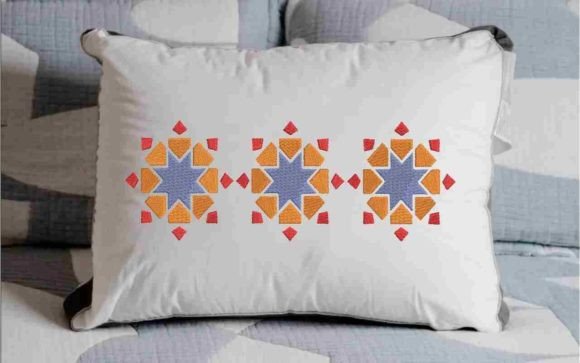
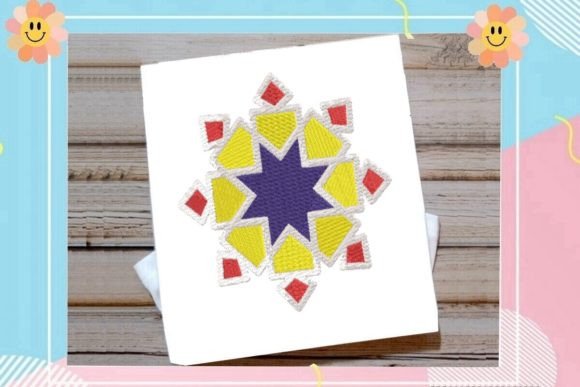
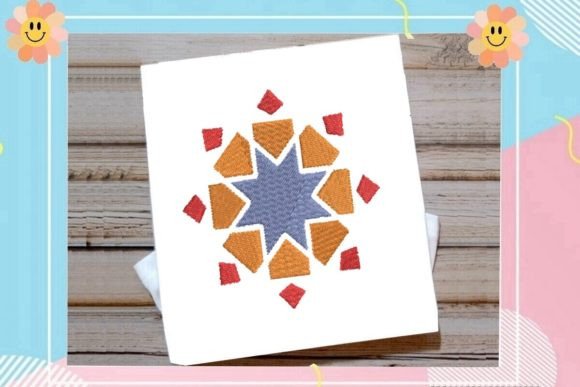
When I opened Colorful Ceramics of North Africa, I didn’t just see a machine embroidery design—I felt the weight of tradition in its geometry. The Zellige-inspired layout isn’t just decorative; it pulses with intention. Interlocking shapes, layered motifs, and rhythmic repetition echo centuries of Moroccan craftsmanship—not as a surface pattern, but as a structural language. It’s vibrant without being chaotic, intricate without sacrificing legibility. That balance is rare. This isn’t a filler motif for corners or borders—it’s a statement piece. Right away, I pictured it centered on a heavyweight linen tea towel, radiating warmth in a sunlit kitchen, or scaled down as an embroidered patch on a denim jacket sleeve. Its personality leans artisanal, confident, and culturally grounded—not trendy, not generic.
Where It Shines in Real Projects
I tested Colorful Ceramics of North Africa across three real-use cases: a custom organic cotton tote bag for a local boutique, a set of baby onesies for a handmade gift line, and a limited-run pillow cover collection for a small shop launch. On the tote, it held up beautifully—clean satin stitch outlines defined the tile edges, and the fill stitch density gave rich texture without puckering. Customers paused mid-browse to trace the pattern with their fingers. On the onesies, I used a lightweight tear-away stabilizer and reduced stitch density slightly (a quick edit in my software)—and it retained clarity even at 3.5 inches wide. The pillow covers? Perfect. The design’s symmetry and balanced negative space made it feel intentional, not busy. As a sweatshirt embroidery, it adds instant sophistication—especially when paired with tonal thread colors that let the shape speak louder than the hue.
Where to Pause—and Why
This design demands thoughtful placement. On stretchy fabrics like jersey or ribbed knits, the tight geometry can distort if stabilizer isn’t layered precisely—so test on scrap first, especially near seams or curved hems. Tiny hoop sizes (under 4x4 inches) will compress detail; corners and fine Zakhrapha flourishes may lose definition. Dark fabrics require careful thread color selection—some brights mute quickly, so check contrast in natural light, not just on screen. And while it reads beautifully on flat surfaces like towels or aprons, avoid placing it over high-curve areas like cap crowns unless you’re willing to split and reposition the design manually. Also, skip ultra-thin fabrics like voile or chiffon—the stitch density needs substance to land cleanly.
Design Integrity Meets Customer Trust
What makes Colorful Ceramics of North Africa more than just pretty stitches? It signals care. When customers see this level of cultural nuance and technical execution on a finished product—a personalized gift, a boutique apron, a holiday tea towel—they don’t just register “embroidery.” They register *intention*. That builds trust. For Etsy sellers and craft fair vendors, it elevates perceived value instantly. A buyer scrolling past dozens of floral monograms stops for this. It feels like a story stitched, not stamped. And because it’s rooted in a real visual tradition—not a vague “ethnic” cliché—it supports brand consistency for makers who prioritize authenticity over algorithm-friendly trends.
Practical Designer Notes You’ll Actually Use
- Always test on scrap fabric first—especially with textured weaves or blends. Zellige patterns reveal inconsistencies fast.
- Review stitch density before hooping. If your machine struggles with dense fills, reduce density by 5–10%—it rarely sacrifices impact.
- Confirm hoop size compatibility. This design benefits from breathing room—avoid cramming it into tiny hoops unless you’re editing for scale.
- Inspect small details in black-and-white mockups. Some motifs rely on color contrast; verify they read clearly in monochrome for digital previews or print catalogs.
- Use appropriate stabilizer: medium-weight cut-away for knits, tear-away for stable wovens, and a light topping for napped fabrics like terry cloth.
- Check licensing terms before selling finished items. As a commercial embroidery file, confirm whether personal use, small business resale, or digital redistribution is permitted.
- Compare thread colors on both light and dark backgrounds. What pops on ivory may disappear on navy—swatch physically, not just digitally.
More Than a Pattern—A Design Asset With Purpose
Colorful Ceramics of North Africa works hardest when treated as more than decoration. It’s a bridge: between heritage and contemporary craft, between handmade warmth and professional polish. I’ve used it as a focal point on nursery wall hangings (paired with soft neutrals), as a subtle repeat along the hem of a linen skirt, and even digitized a simplified version for a printable mockup pack—because designers need authentic, culturally resonant assets that don’t look like stock. For creative entrepreneurs building a distinct voice—whether through custom apparel, embroidered patches, or curated holiday gifts—this design delivers presence without shouting. It invites closer looking. It rewards attention. And in a market flooded with safe, scalable motifs, that kind of quiet confidence is rare.
Final Thought: Let It Breathe
Don’t rush Colorful Ceramics of North Africa. Give it space on your fabric. Choose thread with intention. Pair it with materials that honor its rhythm—linen, canvas, midweight cotton—not flimsy synthetics. It’s not a background element. It’s a conversation starter. Whether you’re stitching for joy, gifting with meaning, or building a craft business rooted in authenticity, this embroidery file earns its place—not because it’s colorful, but because it’s considered.